
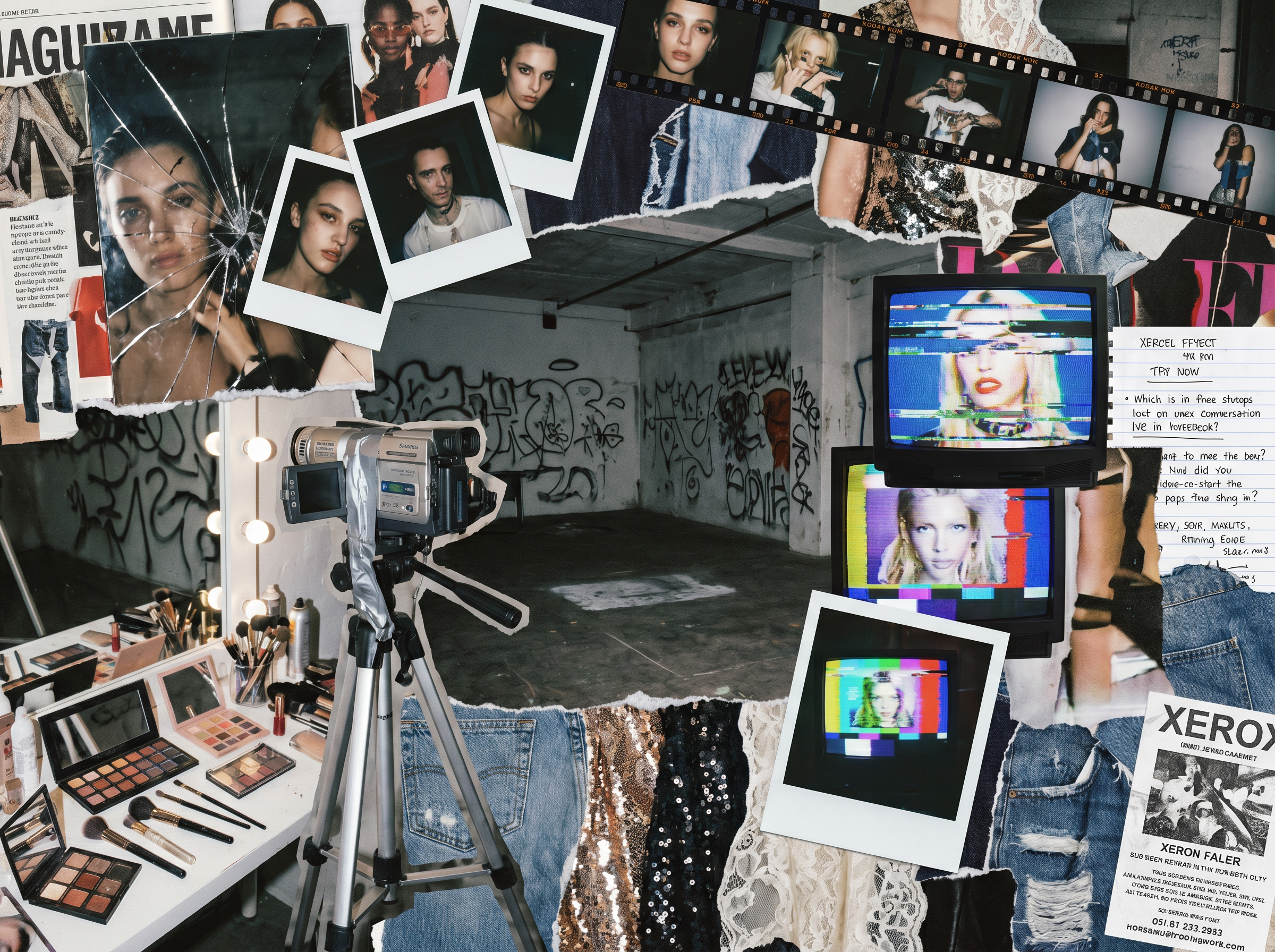
The old fantasy says the song should be enough. It is a romantic idea, and occasionally it is true. A melody cuts through everything. A voice makes context irrelevant. A chorus travels farther than its cover art. But in the current pop underground, sound rarely arrives alone. It arrives with a thumbnail, a crop, a color, a pose, a typeface, a caption, a live clip, a tagged aesthetic, and an audience trained to read all of it instantly.
This does not mean image is replacing music. That argument is tired and usually dishonest. Pop has always been visual. What has changed is the distribution of visual meaning. In earlier eras, image could be concentrated in videos, magazine shoots, performances, and album packaging. Now every fragment is visual infrastructure. A single’s first impression might be a square on a phone held by someone half-awake.
For underground and emerging artists, image can provide scale before scale exists. It can make a small release feel like part of a world. A consistent visual language tells listeners how to enter the music, especially when the artist has no massive press machine explaining it for them. The risk is that image can also expose emptiness quickly. A world with no songs inside it becomes a mood board with a streaming link.
Troye Sivan’s recent pop work shows how visual ease can be highly constructed without feeling stiff. Charli XCX has turned graphic language, attitude, and platform-native self-awareness into part of the listening experience. Dorian Electra treats visuals almost as theory in costume form. Rina Sawayama uses image to hold genre collision and emotional scale. Slayyyter often understands that the synthetic surface is not a mask over the song; it is part of the song’s argument.
The new underground learns from all of this, sometimes too quickly. You can see artists building entire eras from a few repeatable codes: chrome, latex, flash, religious iconography, brutalist type, bedroom webcam grain, red hallway light, luxury decay, angel wings, office wear, club sweat. Some of it is thrilling. Some of it is indistinguishable by the second scroll.
Visual identity works when it clarifies pressure. It should answer questions the music raises: who is speaking, what room are we in, what kind of desire is being staged, what does confidence look like here, where does the performance crack? When image only says “cool,” it is not doing enough.
A lot of current pop visuals confuse darkness with depth. Black backgrounds, wet skin, cigarettes, smeared makeup, and blue light can create atmosphere, but they cannot create perspective by themselves. The difference between a strong visual world and a generic dark-pop wrapper is specificity. What kind of night is this? Who has power in the frame? Is the artist hiding, hunting, collapsing, posing, escaping, or selling us a coat?
The connection between image and sound is especially strong in club-adjacent pop because dance music changes how bodies are imagined. A track with a tight bass line and dry vocal suggests different movement than a maximal chorus with glittering synths. The image should know that. It should not put every song in the same cinematic alley.
For smaller publications, this visual turn changes criticism too. Writing about pop now often means writing about the conditions around the song: the cover, the video, the live styling, the edits, the audience rituals, the way fans use the track to perform themselves. That can be rich territory, but it can also tempt critics into reviewing branding instead of music.
The solution is not to pretend image does not matter. The solution is to ask better questions. Does the visual identity reveal something audible? Does the song become more legible because of the world around it, or is the world compensating for weak writing? Does the aesthetic invite interpretation, or does it arrive pre-interpreted and dead?
Charli’s strongest visual moments often work because they feel socially aware. The graphics and styling understand the speed, irony, competitiveness, and intimacy of internet pop fandom. Troye’s sleekness works because it is tied to physicality and desire. Rina’s scale works because the visual drama supports actual vocal and genre drama.
Underground pop does not need expensive visuals to participate in this conversation. It needs taste and coherence. A cheap image can be better than a costly one if it understands the song. A rough video can do more than a polished clip if the roughness belongs to the artist’s emotional language.
The danger is premature branding. Some artists build logos before they build songs, lore before they build hooks, rollouts before they know what they are trying to say. The internet encourages this because a coherent aesthetic can look like momentum. But the audience eventually notices when the architecture has no rooms.
The best new pop projects treat image and sound as mutual pressure. The song keeps the visual world honest. The visual world gives the song a body. Neither is allowed to coast.
This is why the underground remains worth watching. Without massive budgets, artists have to make sharper choices. The strongest ones use limitation as style rather than apology. They understand that a world is not built by adding more references. It is built by removing what does not belong.
What matters is not whether every artist involved sounds alike. They do not, and forcing them into one tidy movement would flatten the point. The shared signal is more atmospheric than technical: a willingness to let pop carry tension, to let image behave like structure, and to let the dance floor act as a stage for complicated feeling rather than simple escape.
That is why the best writing around this music has to resist the easy headline. A song can be fun and defensive at once. A visual era can be beautiful and slightly suspect. A club track can be engineered for release while still carrying a private bruise. Fever Signal is most interested in that overlap, where style is not decoration but evidence.
The healthier future for this lane will depend on restraint. The internet rewards constant escalation: brighter visuals, harder hooks, bigger claims, more mythology, faster reinvention. Some artists will burn out trying to turn every release into an event. The better work tends to make its own weather slowly, giving listeners enough surface to enter and enough shadow to return.
For a small publication, that restraint matters as much as the subject matter. Fever Signal is not trying to crown a scene before it exists, or pretend every stylish release is a cultural rupture. The more useful task is slower: notice patterns, name pressures, separate mood from substance, and give emerging work enough context without inflating it into mythology. Underground pop deserves writing that can enjoy the lighting without being fooled by it.
That also means leaving room for failure. Not every glossy hook earns its drama. Not every visual era deserves the word “world.” Not every artist with a coherent palette has a coherent point of view. The current moment is exciting because the tools for self-construction are everywhere, but that abundance also makes imitation easier. The strongest work usually contains some resistance to its own aesthetic, a detail that feels inconvenient, funny, wounded, plain, or too specific to have been generated by trend alone.
The listener’s job is not to police pleasure until it dies. A great pop song can be immediate, silly, expensive-sounding, emotionally obvious, or built for one perfect walk to the train. But criticism can ask whether the pleasure has texture. Does the track leave a residue after the first rush? Does the image reveal a person, a character, a scene, or only a reference board? Does the performance understand what it is protecting? Those questions keep the conversation alive after the chorus ends.
Fever Signal’s interest in nightlife-pop, alt-pop, dark dance-pop, and visual culture starts there: in the gap between surface and signal. The surface matters. The signal matters more.
A useful archive should age better than a rollout. It should still make sense when the teaser clips are gone, when the palette changes, and when the artist has moved to another room. That is the standard here: not hype that expires by next week, but criticism that helps the reader understand why a sound, image, or pose felt charged in the first place.
The music after midnight is rarely pure. It is commercial and private, theatrical and practical, funny and wounded, sometimes brilliant and sometimes just dressed well. Writing about it honestly means keeping all of those truths in the frame at once, even when the cleaner story would be easier to sell. That friction is the point of the whole signal, and always has been. The most convincing version of this editorial frame is patient rather than breathless. It lets a song be minor without treating that as failure, and lets a small artist be promising without pretending promise is proof. That distinction is what keeps a niche publication credible. Taste is not the same as hype; taste is the ability to hear scale, limits, texture, and possibility at the same time. It also remembers that restraint can be more persuasive than volume, especially in a culture trained to mistake loudness for arrival and saturation for meaning. The archive should feel edited, not inflated, and skeptical without becoming allergic to pleasure, because pleasure is part of the evidence too, not a guilty exception to it at all.